11/16/09

introduction

Good day sir... good day fellas...
i'm here again... introducing my self... hehehe
Laughing ...
I'm Leah Ana F. Saavedra BSIT-IV... but still in third year standing... wahahahaha...
I expect this subject to be fun and fun and fun
Laughing ... and uhmmmm QuestionQuestionQuestion i'll do better this time QuestionQuestionQuestion hehehe...
and to our teacher, when i met him he was everything i expected
affraid ... as always... (superlative!!!)
the end...amping mo pirme...
_________________
-=♥yhang♥=-

10/13/09

COMDDAP (Computer Manufacturers Distributors and Dealers Association of the Philippines) Davao Expo 2009 held at Apo View Hotel, Davao City on July 2-4, 2009.

What is COMDDAP?


COMDDAP is an association of the country's top information technology businesses. Its primary objective is to promote the sustainable development of the of the country's information technology industry through voluntary collaboration of its member companies. It is the goal of COMDDAP to be able to provide its members general views and updates from different sectors - private and government, and highly regarded individuals to further uplift the morale and knowledge of its organization.

The vision of promoting and elevating the standards of Information technology (IT) in the Philippines fueled a group of prominent computer companies to form the Computer Distributors and Dealers Association of the Philippines or COMDDAP. Its initial member-companies represent the world's leading makers and providers of computer products, solutions and peripherals.

In 1997, the manufacturing sector - represented by industry leaders Hewlett Packard, Epson and Compaq, among others - was integrated into the COMDDAP membership, making the association a more diverse representation of the IT sector and thus the new name, COMPUTER MANUFACTURERS, DISTRIBUTORS AND DEALERS ASSOCIATION OF THE PHILIPPINES.


Experience:
Last July2-4, me and my classmates went to Apo view Hotel to witness the IT exhibits and Technology Update Seminars.
We arrived at the area at 1:30 pm and we were given stickers at the entrance that labelled STUDENT which we attached to our IDs. Then we enter the Grand Ballroom area. I don’t know about my colleagues but I was definitely amazed with the whole bunch of computer and technology products displayed there. We were actually supposed to get there early by 1pm to attend the first part of the seminar held inside the conference area of the Main Ballroom of the hotel in which we are scheduled to attend. We were sorry we got late but we were still lucky we can still join the second part of the seminar which would start at 2pm.
The first seminar was about ERIC DMS (Dealer Management System). We arrived late so we didn’t witnessed it.
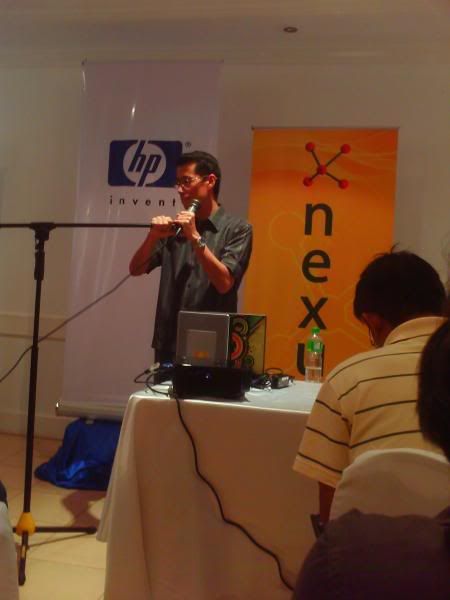
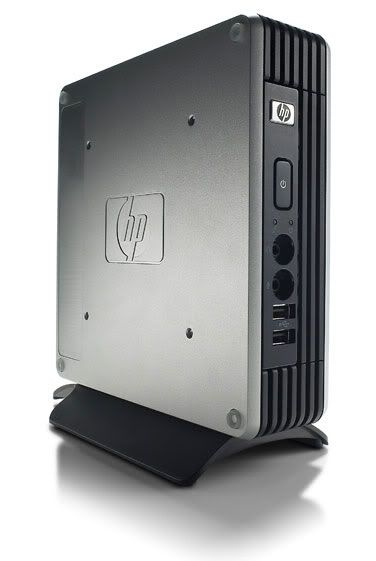
The second seminar was about HP Thin Client.
Mr. Leonard Zapa was the presenter or speaker in the seminar. He is the Market Developer Manager of the company. About the product THIN CLIENTS is a computing device without a hard drive which displays data and applications from remotely located servers, blade PC's, or Virtual Desktops.


THIN CLIENTS OS (Operating Systems):

- Linux
- windowsCE
- WindowsXPe

There were also challenges for Information Technology (IT) Professionals:

- Provide Information Security
- Deployment and Maintenance
- Total Cost of Ownership (TCO)

Advantages of the THIN CLIENTS:

- Enhanced Security
- Easy Manageability
- High Reliability
- Environment Friendly
- Lower-Overall Costs


After the presentation they gave several questions regarding to their presentation. If someone answers the question they gave some tokens like T-Shirt, Flash drive (5 pieces of 2G USB and 1 piece of 8G USB) and 1 piece of mouse in the computer. We're very excited to answer the question for the tokens. After the seminars, we left the room because we want to continue our viewing in the exhibit. We continue collecting flyers or magazines for us to have a references. Because of this event I had gathered some information regarding the technology and other things which is related in our course.


_________________
-=♥yhang♥=-

10/1/09

information environment

When i was browsing the internet, i encountered many information environment. But digital libraries caught my attention. So i decided to choose this information environment.

History of digital libraries

The idea of easy, finger-tip access to information-what we conceptualize as digital libraries today-began with Vannenar Bush's Memex machine (Bush, 1945) and has continued to evolve with each advance in information technology. With the arrival of computers, the concept centered on large bibliographic databases, the now familiar online retrieval and public access systems that are part of any contemporary library. When computers were connected into large networks
forming the Internet, the concept evolved again, and research turned to creating libraries of digital information that could be accessed by anyone from anywhere in the world. Phrases like "virtual library," "electronic library," "library without walls" and, most recently, "digital library," all have been used interchangeably to describe this broad concept.

What is a digital library?

There is much confusion surrounding this phrase, stemming from three factors. First, the library community has used several different phrases over the years to denote this concept-electronic library, virtual library, library without walls-and it
never was quite clear what each of these different phrases meant. "Digital library" is simply the most current and most widely accepted term and is now used almost exclusively at conferences, online, and in the literature.

One thing digital libraries will not be is a single, completely digital system that provides instant access to all information, for all sectors of society, from anywhere in the world. This is simply unrealistic. This concept comes from the early days
when people were unaware of the complexities of building digital libraries. Instead, they will most likely be a collection of disparate resources and disparate systems, catering to specific communities and user groups, created for specific purposes. They also will include, perhaps indefinitely, paper-based collections. Further, interoperability across digital libraries-of technical architectures, metadata, and document formats-will also only likely be possible within relatively bounded systems developed for those specific purposes and communities.

For librarians, this definition of a digital library, and these characteristics, are the most logical because it expands and extends the traditional library, preserves the valuable work that they do, while integrating new technologies, new processes, and new media.

To start with, let us first know some related information that will help me identify my role in the environment.

There is now a critical mass of digital information resources that can be used to support researchers, learners, teachers and administrators in their work and study. The production of information is on the increase and ways to deal with this
effectively are required. There is the need to ensure that quality information isn’t lost amongst the masses of digital data created everyday. If we can continue to improve the management, interrogation and serving of ‘quality’ information there is huge potential to enhance knowledge creation across learning and research
communities.


Nowadays, it is so important to maximize your time since you have many work to do and you have limited time per day. It is also important to be at ease while doing your tasks. Since technology is growing fast, digital library was created to
help those people who have busy schedules like us, students or teachers and other employees.


The aim of the Information Environment is to help provide convenient access to resources for research and learning through the use of resource discovery and resource management tools and the development of better services and practice. The Information Environment aims to allow discovery, access and use of resources for research and learning irrespective of their location.

My role in this kind of environment is to dessiminate reliable and sufficient information since many rely on digital libraries for their research. And if the information given was wrong, insufficient or hoax, that would give our subcribers
another problem. Since our goal is to provide fast and easy access to information, we should not give the people another problem.

The digital library community seems to face a dilemma at this point. Through its pursuit of design goals of flexibility, extensibility, modularity and abstraction, and its promulgation of those goals as common practice through its implementation of XML metadata standards, it has managed to substantially impede progress towards another commonly held goal, interoperability of digital library content across a range of systems.


Challenges

Creating “effective” digital libraries poses serious challenges for existing and future technologies. The integration of digital media into traditional collections will not be straightforward, like previous new media (e.g., video audio tapes), because of the unique nature of digital information it is less fixed, easily copied, and remotely accessible by multiple users simultaneously. Traditional library processes such as collection development and reference, though forming a potential basis for "digital library" work, will have to be revised and enhanced to accommodate these differences. Taking what we know about libraries as a starting point, we can begin to examine in more detail what the specific challenges might be.

Metadata

Metadata is another issue central to the development of digital libraries. Metadata is the data the describes the content and attributes of any particular item in a digital library. It is a concept familiar to librarians because it is one of the primary
things that librarians do--they create cataloguing records that describe documents. Metadata is important in digital libraries because it is the key to resource discovery and use of any document. Anyone who has used Alta Vista, Excite, or any of the other search engines on the Internet knows that simple full-text searches don't scale in a large network. One can get thousands of hits, but most of them will be irrelevant. While there are formal library standards for metadata, namely AACR, such records are very time-consuming to create and require specially trained personnel. Human cataloguing, though superior, is just too labour extensive for the already large and rapidly expanding information environment. Thus, simpler schemes for metadata are being proposed as solutions.

While they are still in their infancy, a number of schemes have emerged, the most prominent of which is the Dublin Core, an effort to try and determine the "core" elements needed to describe materials. The first workshop took place at OCLC
headquarters in Dublin, Ohio, hence the name "Dublin Core." The Dublin Core workshops defined a set of fifteen metadata elements--much simpler than those used in traditional library cataloguing. They were designed to be simple enough to
be used authors, but at the same time, descriptive enough to be useful in resource discovery.

The lack of common metadata standards-ideally, defined for use in some specified context-is yet another a barrier to information access and use in a digital library, or in a coordinated digital library scheme.


Naming, identifiers, and persistence

The fifth issue is related to metadata. It is the problem of naming in a digital library. Names are strings that uniquely identify digital objects and are part of any document's metadata. Names are as important in a digital library as an ISBN
number is in a traditional library.

Any system of naming that is developed must be permanent, lasting indefinitely. This means, among other things, that the name can't be bound up with a specific location. The unique name and its location must be separate. This is very much
unlike URLs, the current method for identifying objects on the Internet. URL's confound in one string several items that should be separate. They include the method by which a document is accessed (e.g., HTTP), a machine name and
document path (its location), and a document file name which may or may not be unique (e.g., how many index.html files do you have on your Web site?). URLs are very bad names because whenever a file is moved, the document is often lost
entirely.

Copyright / rights management

Copyright has been called the "single most vexing barrier to digital library development" (Chepesuik, 1997:49). The current paper-based concept of copyright breaks down in the digital environment because the control of copies is
lost. Digital objects are less fixed, easily copied, and remotely accessible by multiple users simultaneously. The problem for libraries is that, unlike private businesses or publishers that own their information, libraries are, for the most part,
simply caretakers of information--they don't own the copyright of the material they hold. It is unlikely that libraries will ever be able to freely digitize and provide access to the copyrighted materials in their collections. Instead, they will have to develop mechanisms for managing copyright, mechanisms that allow them to provide information without violating copyright, called rights management.

Preservation

Another important issue is preservation--keeping digital information available in perpetuity. In the preservation of digital materials, the real issue is technical obsolescence. Technical obsolescence in the digital age is like the deterioration of
paper in the paper age. Libraries in the pre-digital era had to worry about climate control and the de-acidification of books, but the preservation of digital information will mean constantly coming up with new technical solutions.

The purpose of preservation is to ensure protection of information of enduring value for access by present and future generations (Conway, 1990: 206). Libraries and archives have served as the central institutional focus for preservation, and both types of institutions include preservation as one of their core functions. In recent decades, many major libraries and archives have established formal preservation programs for traditional materials which include regular allocation of resources for preservation, preventive measures to arrest deterioration of materials, remedial measures to restore the usability of selected materials, and the incorporation of preservation needs and requirements into overall program planning.

Preservationists within the library and archival community have been instrumental in developing an array of tools and methodologies to reduce the decay of traditional materials and to restore books and documents that have deteriorated to such an extent that their longevity and usability are threatened. Provisions for fire protection and adequate environmental controls frequently are incorporated into new library and archival facilities. Rehousing of acid-based paper materials is a common task in many repositories and microfilming is used extensively and cost effectively to preserve endangered materials. Undertakings such as the brittle books initiative, the American Newspapers Project, and the NEH-funded microfilming program have saved millions of unique and imperiled items (Preserving the Intellectual Heritage). Many libraries and archives have curbed their voracious appetites for acquisition and collecting in an effort to balance the breadth and depth of their holdings against long-term stewardship responsibilities. The change over from acid to alkaline paper in publishing and much desktop printing counts as a significant victory for preservation.


Libraries around the world have been working on this daunting set of challenges for several years now. They have created many digital library initiatives and projects, and have formed various national schemes for jointly exploring key issues. With several years accumulated experience, the initial enthusiasm surrounding the development of the digital library has been replaced by sober second thought. Librarians have discovered that, with a few exceptions, making a business case for digitization and investments in digital technology is more difficult than first envisioned, especially given the technical and legal constraints that must first be overcome. As with most other technical developments in libraries over the years,
we will have to move forward in small, manageable, evolutionary steps, rather than in an rapid revolutionary manner.

As information professionals, we live in very interesting times. Effective search and discovery over open and hidden digital resources on the Internet remains a problematic and challenging task. The difficulties are exacerbated by today's
greatly distributed scholarly information landscape. This distributed information environment is populated by silos of: full-text repositories maintained by commercial and professional society publishers; preprint servers and Open Archive
Initiative (OAI) provider sites; specialized Abstracting and Indexing (A & I) services; publisher and vendor vertical portals; local, regional, and national online catalogs; Web search and metasearch engines; local e-resource registries and
digital content databases; campus institutional repository systems; and learning
management systems.


All the information i have gathered were based on my research. If i am part of the digital library institute i would like to address those problem and give better solutions to it. Since I too, rely on digital libraries on my research.

_________________
-=♥yhang♥=-

outsource

Outsourcing is subcontracting a process, such as product design or manufacturing, to a third-party company. The decision to outsource is often made in the interest of lowering cost or making better use of time and energy costs, redirecting or conserving energy directed at the competencies of a particular business, or to make more efficient use of land, labor, capital, (information) technology and resources. Outsourcing became part of the business lexicon during the 1980s. It is essentially a division of labour. Outsourcing in the information technology field has two meanings. One is to commission the development of an application to another organization, usually a company that specializes in the development of this type of application. The other is to hire the services of another company to manage all or parts of the services that otherwise would be rendered by an IT unit of the organization. The latter concept might not include development of new applications.

Outsourcing involves the transfer of the management and/or day-to-day execution of an entire business function to an external service provider. The client organization and the supplier enter into a contractual agreement that defines the transferred services. Under the agreement the supplier acquires the means of production in the form of a transfer of people, assets and other resources from the client. The client agrees to procure the services from the supplier for the term of the contract. Business segments typically outsourced include information technology, human resources, facilities, real estate management, and accounting. Many companies also outsource customer support and call center functions like telemarketing, CAD drafting, customer service, market research, manufacturing, designing, web development, print-to-mail, content writing, ghostwriting and engineering. Offshoring is the type of outsourcing in which the buyer organization belongs to another country.
Outsourcing and offshoring are used interchangeably in public discourse despite important technical differences. Outsourcing involves contracting with a supplier, which may or may not involve some degree of offshoring. Offshoring is the transfer of an organizational function to another country, regardless of whether the work is outsourced or stays within the same corporation/company.

With increasing globalization of outsourcing companies, the distinction between outsourcing and offshoring will become less clear over time. This is evident in the increasing presence of Indian outsourcing companies in the United States and United Kingdom. The globalization of outsourcing operating models has resulted in new terms such as nearshoring, noshoring, and rightshoring that reflect the changing mix of locations. This is seen in the opening of offices and operations centers by Indian companies in the U.S. and UK. A major job that is being outsourced is accounting. They are able to complete tax returns across seas for people in America.
Multisourcing refers to large outsourcing agreements (predominantly IT). Multisourcing is a framework to enable different parts of the client business to be sourced from different suppliers. This requires a governance model that communicates strategy, clearly defines responsibility and has end-to-end integration.
Strategic outsourcing is the organizing arrangement that emerges when firms rely on intermediate markets to provide specialized capabilities that supplement existing capabilities deployed along a firm’s value chain (see Holcomb & Hitt, 2007). Such an arrangement produces value within firms’ supply chains beyond those benefits achieved through cost economies. Intermediate markets that provide specialized capabilities emerge as different industry conditions intensify the partitioning of production. As a result of greater information standardization and simplified coordination, clear administrative demarcations emerge along a value chain. Partitioning of intermediate markets occurs as the coordination of production across a value chain is simplified and as information becomes standardized, making it easier to transfer activities across boundaries.

Due to the complexity of work definition, codifying requirements, pricing, and legal terms and conditions, clients often utilize the advisory services of outsourcing consultants (see sourcing advisory) or outsourcing intermediaries to assist in scoping, decision making, and vendor evaluation.
Reasons for outsourcing

Organizations that outsource are seeking to realize benefits or address the following issues:
• Cost savings. The lowering of the overall cost of the service to the business. This will involve reducing the scope, defining quality levels, re-pricing, re-negotiation, cost re-structuring. Access to lower cost economies through offshoring called "labor arbitrage" generated by the wage gap between industrialized and developing nations.
• Focus on Core Business. Resources (for example investment, people, infrastructure) are focused on developing the core business. For example often organizations outsource their IT support to specilaised IT services companies.
• Cost restructuring. Operating leverage is a measure that compares fixed costs to variable costs. Outsourcing changes the balance of this ratio by offering a move from fixed to variable cost and also by making variable costs more predictable.
• Improve quality. Achieve a step change in quality through contracting out the service with a new service level agreement.
• Knowledge. Access to intellectual property and wider experience and knowledge.
• Contract. Services will be provided to a legally binding contract with financial penalties and legal redress. This is not the case with internal services.
• Operational expertise. Access to operational best practice that would be too difficult or time consuming to develop in-house.
• Access to talent. Access to a larger talent pool and a sustainable source of skills, in particular in science and engineering.
• Capacity management. An improved method of capacity management of services and technology where the risk in providing the excess capacity is borne by the supplier.
• Catalyst for change. An organization can use an outsourcing agreement as a catalyst for major step change that cannot be achieved alone. The outsourcer becomes a Change agent in the process.
• Enhance capacity for innovation. Companies increasingly use external knowledge service providers to supplement limited in-house capacity for product innovation.
• Reduce time to market. The acceleration of the development or production of a product through the additional capability brought by the supplier.
• Commodification. The trend of standardizing business processes, IT Services and application services enabling businesses to intelligently buy at the right price. Allows a wide range of businesses access to services previously only available to large corporations.
• Risk management. An approach to risk management for some types of risks is to partner with an outsourcer who is better able to provide the mitigation.
• Venture Capital. Some countries match government funds venture capital with private venture capital for startups that start businesses in their country.
• Tax Benefit. Countries offer tax incentives to move manufacturing operations to counter high corporate taxes within another country.

Criticisms of outsourcing
Quality Risks
Quality Risk is the propensity for a product or service to be defective, due to operations-related issues. Quality risk in outsourcing is driven by a list of factors. One such factor is opportunism by suppliers due to misaligned incentives between buyer and supplier, information asymmetry, high asset specificity, or high supplier switching costs. Other factors contributing to quality risk in outsourcing are poor buyer-supplier communication, lack of supplier capabilities/resources/capacity, or buyer-supplier contract enforceability. Two main concepts must be considered when considering observability as it related to quality risks in outsourcing: the concepts of testability and criticality.
Quality fade is the deliberate and secretive reduction in the quality of labor in order to widen profit margins. The downward changes in human capital are subtle but progressive, and usually unnoticeable by the out sourcer/customer. The initial interview meets requirements, however, with subsequent support, more and more of the support team are replaced with novice or less experienced workers. India IT shops will continue to reduce the quality of human capital under the pressure of drying up labor supply and upward trend of salary, pushing the quality limits. Such practices are hard to detect, as customers may just simply give up seeking help from the help desk. However, the overall customer satisfaction will be reduced greatly over time. Unless the company constantly conducts customer satisfaction surveys, they may eventually be caught in a surprise of customer churn, and when they find out the root cause, it could be too late. In such cases, it can be hard to dispute the legal contract with the India outsourcing company, as their staff are now trained in the process and the original staff made redundant. In the end, the company that outsources is worse off than before it outsourced its workforce to India.

Public opinion

There is a strong public opinion regarding outsourcing (especially when combined with offshoring) that outsourcing damages a local labor market. Outsourcing is the transfer of the delivery of services which affects both jobs and individuals. It is difficult to dispute that outsourcing has a detrimental effect on individuals who face job disruption and employment insecurity; however, its supporters believe that outsourcing should bring down prices, providing greater economic benefit to all. There are legal protections in the European Union regulations called the Transfer of Undertakings (Protection of Employment). Labor laws in the United States are not as protective as those in the European Union. On June 26 2009, Jeff Immelt, the CEO of General Electric, called for the United States to increase its manufacturing base employment to 20% of the workforce commenting that the U.S. has outsourced too much and can no longer rely on consumer spending to drive demand.
Language skills

In the area of call centers end-user-experience is deemed to be of lower quality when a service is outsourced. This is exacerbated when outsourcing is combined with off-shoring to regions where the first language and culture are different. The questionable quality is particularly evident when call centers that service the public are outsourced and offshored.

The public generally find linguistic features such as accents, word use and phraseology different which may make call center agents difficult to understand. The visual clues that are present in face-to-face encounters are missing from the call center interactions and this also may lead to misunderstandings and difficulties.

In addition to language and accent differences, a lack of local social and geographic knowledge is often present, leading to misunderstandings or mis-communications.
Social responsibility

Outsourcing sends jobs to the lower-income areas where work is being outsourced to, which provides jobs in these areas and has a net equalizing effect on the overall distribution of wealth. Some argue that the outsourcing of jobs (particularly off-shore) exploits the lower paid workers. A contrary view is that more people are employed and benefit from paid work. Despite this argument, domestic workers displaced by such equalization are proportionately unable to outsource their own costs of housing, food and transportation.

On the issue of high-skilled labor, such as computer programming, some argue that it is unfair to both the local and off-shore programmers to outsource the work simply because the foreign pay rate is lower. On the other hand, one can argue that paying the higher-rate for local programmers is wasteful, or charity, or simply overpayment. If the end goal of buyers is to pay less for what they buy, and for sellers it is to get a higher price for what they sell, there is nothing automatically unethical about choosing the cheaper of two products, services, or employees.

Social responsibility is also reflected in the costs of benefits provided to workers. Companies outsourcing jobs effectively transfer the cost of retirement and medical benefits to the countries where the services are outsourced. This represents a significant reduction in total cost of labor for the outsourcing company. A side effect of this trend is the reduction in salaries and benefits at home in the occupations most directly impacted by outsourcing.

Insourcing is the opposite of outsourcing; that is insourcing (or contracting in) is often defined as the delegation of operations or jobs from production within a business to an internal (but 'stand-alone') entity that specializes in that operation. Insourcing is a business decision that is often made to maintain control of critical production or competencies. An alternate use of the term implies transferring jobs to within the country where the term is used, either by hiring local subcontractors or building a facility.
Insourcing is widely used in an area such as production to reduce costs of taxes, labor (e.g., American labor is often cheaper than European labor), transportation, etc.
Insourcing at United Parcel Service (UPS) was described in the bestselling book The World Is Flat, by Thomas Friedman.
According to PR Web, insourcing was becoming more common by 2006 as businesses had less than satisfactory experiences with outsourcing (including customer support). Many outsourcing proponents responded to a negative consumer opinion backlash resulting from outsourcing their communications management to vendors who rely on overseas operations.
To those who are concerned that nations may be losing a net amount of jobs due to outsourcing, some point out that insourcing also occurs. According to a study by Mary Amiti and Shang-Jin Wei, in the United States, the United Kingdom, and many other industrialized countries more jobs are insourced than outsourced. They found that out of all the countries in the world they studied, the U.S. and the U.K. actually have the largest net trade surpluses in business services. Countries with a net deficit in business services include Indonesia, Germany and Ireland.
Insourcing is loosely referred in call centers who are doing the work of the outsourcing companies. Companies that outsource include Dell, Hewlett Packard, Symantec, and Linksys. The callcenters and technicians that are contracted to handle the outsourced work are usually over-seas. Customers may refer to these countries as "India" technical support if they are hard to understand over telecommunications. These insourcing companies were a great way to save money for the outsourcing of work, but quality varies, and poor performance has sometimes harmed the reputations of companies who provide 24/7 customer/technical support.
The Organization for International Investment, a Washington D.C. trade association, uses the term to describe the creation of jobs through foreign direct investment within the United States.


Outsourcing began in the early eighties when organizations started delegating their non-core functions to an external organization that was specialized in providing a particular service, function or product. In outsourcing, the external organization would take on the management of the outsourced function.
Most organizations choose outsourcing because outsourcing offers a lot of advantages. When organizations outsource to countries like India, they benefit from lower costs and high-quality services. Moreover organizations can concentrate more on core functions once they outsource their non-core functions. Outsourcing can also help organizations make better use of their resources, time and infrastructure.
In outsourcing, the outsourcer and the outsourcing partner have a greater relationship when compared to the relationship between a buyer and a seller. In outsourcing, the outsourcer trusts the outsourcing partner with vital information. Outsourcing is no longer confined to the outsourcing of IT services. Outsourcers in the US and UK now outsource financial services, engineering services, creative services, data entry services and much more.
Most organizations are opting to outsource because outsourcing enables organizations to access intellectual capital, focus on core competencies, shorten the delivery cycle time and reduce costs significantly. Organizations feel outsourcing is an effective business strategy to help improve their business.


The opposite of outsourcing can be defined as insourcing. When an organization delegates its work to another entity, which is internal yet not a part of the organization, it is termed as insourcing. The internal entity will usually have a specialized team who will be proficient in the providing the required services. Organizations sometimes opt for insourcing because it enables them to maintain a better control of what they outsource. Insourcing has also come to be defined as transferring work from one organization to another organization which is located within the same country. Insourcing can also mean an organization building a new business centre or facility which would specialize in a particular service or product.
Organizations involved in production usually opt for insourcing in order to cut down the cost of labor and taxes amongst others. The trend towards insourcing has increased since the year 2006. Organizations who have been dissatisfied with outsourcing have moved towards insourcing. Some organizations feel that they can have better customer support and better control over the work outsourced by insourcing their work rather than outsourcing it. According to recent studies, there is more wok insourced than outsourced in the U.S and U.K. These countries are currently the largest outsourcers in the world. The U.S and U.K outsource and insource work equally.

What is best for your organization?
If your organization has a number of non-core processes which are taking plenty of time, effort and resources to perform in-house, it would be wise to outsource these non-core functions. Outsourcing in this case, would help you save on time, effort, manpower and would also aid you in making quicker deliveries to your customers.
If you require expertise services in areas which do not fall under your core competency, then outsourcing will be a good option as you can get access to expertise services. For reducing costs and making faster deliverables, outsourcing is again a good option.
If your work involves production, then it would be more ideal for your organization to opt for insourcing, as you can save on transportation costs and exercise a better control over your project.
It is not necessary to choose outsourcing over insourcing or vice versa. Your organization can outsource and insource at the same time. By outsourcing and insourcing simultaneously, you can have the best of what both offers and your business can get a competitive advantage!
My stand:
Outsourcing is no longer the permanent cure for an expensive IT or business process ailment.
Having spent the past few years handing over control of troublesome processes to service providers, increasing number of technology leaders are choosing to bring control of problematic systems back in-house.
Analyst Gartner predicts the outsourcing market will grow by just five per cent per annum over the next few years, a figure far lower than the double-digit highs of a few years ago.
What's more, the analyst says four in every five outsourcing relationships will be renegotiated over the duration of a contract.
And some 64 per cent of firms have already brought an outsourced service back in-house, according to consultant Deloitte.
So what's gone wrong? Why are companies reconsidering big external service contracts for in-house provision?
Over a sustained period of time, Computing has investigated the issues and spoken to the companies involved in an attempt to understand whether UK plc is swinging towards outsourcing or insourcing.
Insourcing is a business practice in which work that would otherwise have been contracted out is performed in house.
Insourcing often involves bringing in specialists to fill temporary needs or training existing personnel to perform tasks that would otherwise have been outsourced. An example is the use of in-house engineers to write technical manuals for equipment they have designed, rather than sending the work to an outside technical writing firm. In this example, the engineers might have to take technical writing courses at a local college, university, or trade school before being able to complete the task successfully. Other challenges of insourcing include the possible purchase of additional hardware and/or software that is scalable and energy-efficient enough to deliver an adequate return on investment (ROI).

Insourcing can be viewed as outsourcing as seen from the opposite side. For example, a company based in Japan might open a plant in the United States for the purpose of employing American workers to manufacture Japanese products. From the Japanese perspective this is outsourcing, but from the American perspective it is insourcing. Nissan, a Japanese automobile manufacturer, has in fact done this.

In short, I suggest INSOURCING because I think its benefits and long term advantages outweighs those in outsourcing.. ^_^

_________________
-=♥yhang♥=-

SONA

Sa telecommunications naman, inatasan ko ang Telecommunications Commission na kumilos na tungkol sa mga sumbong na dropped calls at mga nawawalang load sa cellphone. We need to amend the Commonwealth-era Public Service Law. And we need to do it now.”

This area helps every Filipino financially since the issue speaks about lost subscriber’s load. Though not all Filipinos own a phone, it is important to get a fair service of what you are paying.

“Kung noong nakaraan, lumakas ang electronics, today we are creating wealth by developing the BPO and tourism sectors as additional engines of growth. Electronics and other manufactured exports rise and fall in accordance with the state of the world economy. But BPO remains resilient. With earnings of $6 billion and employment of 600,000, the BPO phenomenon speaks eloquently of our competitiveness and productivity. “

This area improves our lives by providing employment to many Filipinos and contributing to our country’s income which in turn, will be used to fund some infrastructures needed to improve our daily lives.

“Let us have a Department of ICT.”

This area brings hope especially to us since having an ICT department brings more jobs and answers problems regarding information and communication.

_________________
-=♥yhang♥=-

listen...